COVID-19 Outbreak first started in China, and subsequently other Asian countries including Japan, Singapore and Korea. When we thought the situation is under control in Asia, the number of imported cases surged as foreigners came home. Hong Kong and Singapore share similar trajectories as cases rose significantly since March.
As an overseas student pursuing a postgraduate degree at Oxford, I kept a close eye on COVID-19 updates and actions of the UK Government and Oxford University. Contrary to my expectation, Oxford was deemed slow and ambiguous in dealing with the situation. It was only by 20 March that the University assured postgraduate students teachings and assessments in the coming term would be delivered online, urging international students to return home as far as possible. Realizing how the UK National Health Service is severely overloaded, where suspected and even positive cases are told to self-isolate with or without medication, I decided to go back to Hong Kong. I took all possible precautionary measures to avoid potential transmission.
Along with Taiwan and Singapore, Hong Kong has been taken as a role model for the pandemic control by European and US media, I wish to share my personal experience of health assessment upon arrival to showcase Hong Kong’s technocratic effort in controlling the number of imported cases. Despite it is something to be proud of, the government is demanded to show more empathy to vulnerable groups worst hit by COVID-19 like its counterparts.
I arrived at Hong Kong International Airport on 29 March after a direct flight from London Heathrow Airport. As expected, everyone on the plane wore surgical masks and personal protective equipment. It was more than a week after imposing the mandatory 14-day quarantine for returning inbound travelers from Europe, the UK and the US. I was warned of long queue at the health check but it was pleasantly smooth and efficient.
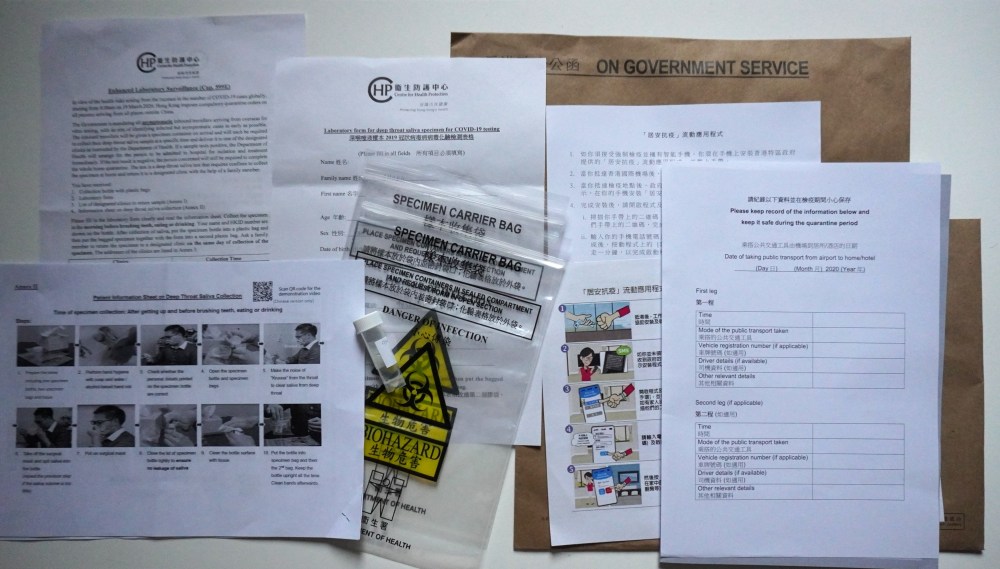
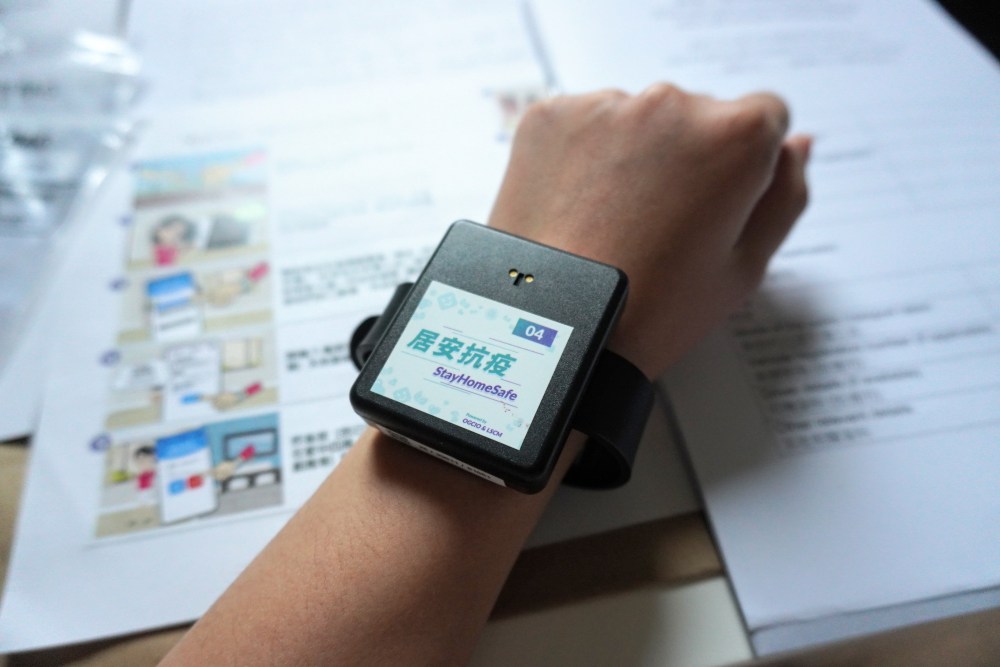
All passengers from the flight first passed through a remote temperature check station as usual, then arrived at a station to fill out quarantine and health declaration forms. The health declaration form can be filled online, which then generates a QR code to be checked at the station. Afterwards, passengers enter a queue to collect the electronic monitoring wristbands. The wristbands pair with “StayHomeSafe” app to track location, ensuring the quarantine order is obeyed.
The wristband contains a rectangular monitoring device, which stands in sharp contrast with the thin plastic strap that experienced technical difficulties and can be easily torn off as seen in media the past few days. The electronic wristband works well and I am impressed by the efficiency of OGCIO staff in improving the bands in a short period of time.
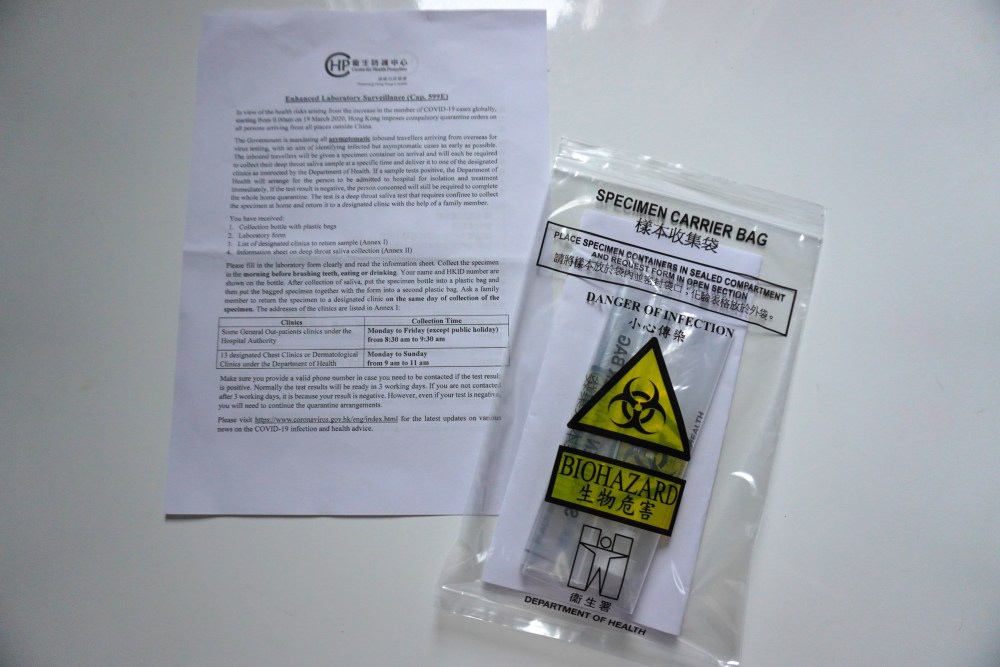
In addition to location tracking, all inbound travelers are all required to test for COVID-19 for enhanced laboratory surveillance. This is vastly different the UK and many European cities, where suspected cases of COVID-19 were only self-isolated but now allowed to be tested due to limited resources.
Witnessing the U-turn of Boris Johnson from herd immunity approach to extreme lockdown, I felt fortunate that the East was in general more vigilant to the outbreak and began control measures earlier. Hong Kong has the additional privilege to spend vast amount of resources on tracing and testing. Many European countries, not to mention developing countries, can hardly achieve the same level of surveillance with limited capacities. This explains why students from developing countries mostly stayed in the UK to avoid spreading the virus back home, subsequently overloading local healthcare systems. My Kenyan friend responded saying they will make the most efficient use out of limited resources to cope with the crisis, but travel ban will be a key step.
Hong Kong has the wealth of resources to achieve high level of monitoring and surveillance, a supreme showcase of technocracy. Yet the level of compassion and humanitarian spirit is surprisingly low given our status of development, reflected by scanty support for the underprivileged and affected communities.
One of my Singaporean schoolmate was tested positive with COVID-19 in Singapore. Whilst worrying about the livelihood of taxi driver who drove him, he was relieved to find out the government offers SGD$100 to the self-employed and freelancers mandated for quarantine, in addition to other support. Earlier the Deputy Prime Minister of Singapore said, “We have saved up for a rainy day”, exemplifying commitment and determination to fight coronavirus with full capacity that Hong Kong leaders ought to learn from.
Seeing in Hong Kong poor households and street cleaners scrambling for masks queuing day and night on streets, freelancers demanding for government support amid coronavirus, I wonder how many more artificial islands we need before fiscal reserves can be spent on restoring livelihoods. The deep-rooted social dissent may be addressed if government is proactive enough to strive for equality in the shock doctrine.
Some say COVID-19 is a gigantic social experiment, I say it is a test of governance and humanity. I sincerely hope the Hong Kong Government proactively roll out supporting measures for the communities worst hit during the pandemic. Measures include the most basic action of offering free masks to street cleaners and poor households; opening temporary shelters for the homeless, following how Cannes Mayor David Lisnard opened part of the Cannes Film Festival venue for the homeless amid France’s lockdown. It is also simple yet empowering to provide grants for workers, freelancers, restaurant owners and others who suffer severe loss during this period; fetch Hong Kong citizens stranded in foreign countries under lockdown.
The COVID-19 pandemic reveals dichotomies and dilemmas in personal, national and international decision-making processes. Nevertheless, one thing we are all certain of is the powerful effect of physical distancing to flatten the curve. The least we can do for medical staff and the community is to stay at home as far as possible. Even though your government may not be taking the best steps at the moment, do not lose hope because we all have a huge stake in alleviating this crisis. Stay at home, bring food to those in need, spare masks and protective equipment for the vulnerable groups. It is the time to show more empathy, love and care to people around us.
Natalie Chung is an appointed youth member at the Council for Sustainable Development under the Hong Kong Government. She is pursuing MPhil at University of Oxford as the Esther Yewpick Lee Millennium Scholar, specialized in environmental policy and climate change. She has previously worked at the World Bank and the United Nations.
 Natalie Chung 鍾芯豫